Learning Arabic Through Play: A Daily Plan for Children
Small steps that combine conversation, listening, letters, and stories to make Arabic learning a natural part of play.
Play gives Arabic learning more meaning
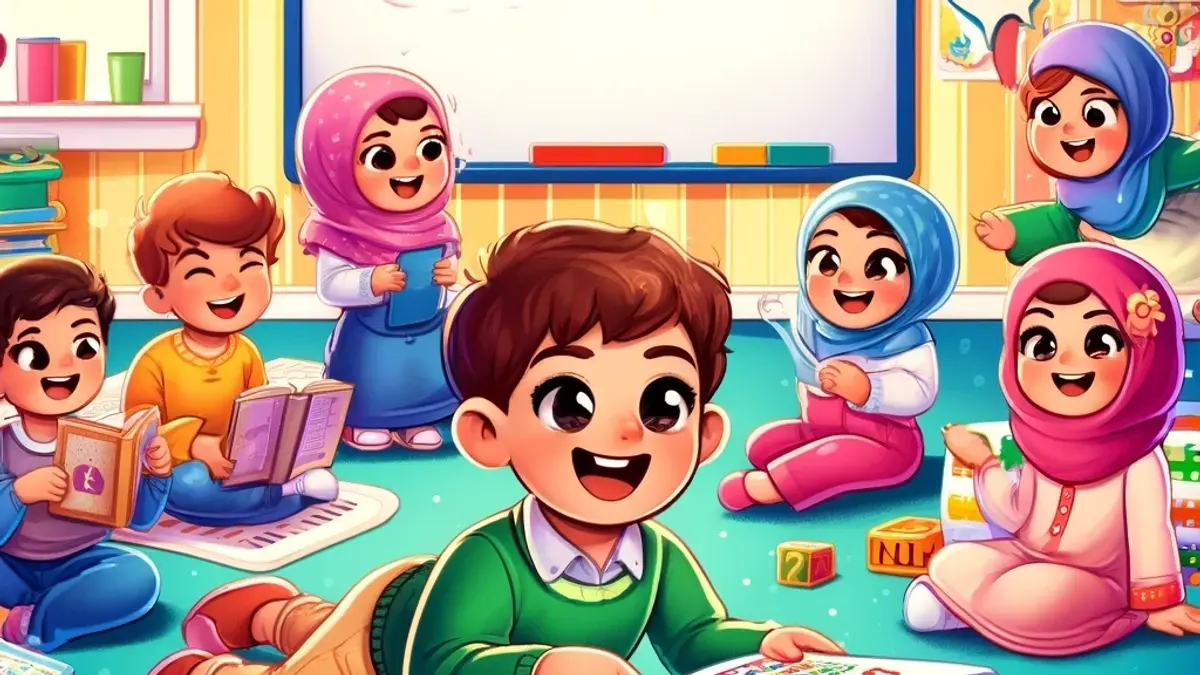
Children learn Arabic in situations where words help them ask, describe, wonder, and laugh—not only on a letter worksheet. At ages 3–5, a goal might be hearing a letter sound, naming a picture, or repeating a short sentence. At ages 6–8, add matching a letter to a word and reading familiar words. Ages 9–12 allow for a longer story or explaining why a particular word was chosen.
Do not make Modern Standard Arabic and a home dialect competitors. Use the language the child understands for conversation, then add useful formal Arabic words from a story or game and explain them simply. If the child is learning Arabic as an additional language, repeat slowly, connect the word to an image or movement, and give time to answer without embarrassment or comparison.
Use a hear, find, say, and use loop
Choose one word or one letter for each round. First, hear the word in a short story or say the letter sound clearly. Next, invite the child to find it among cards or pictures. Then encourage them to say it or form it with their hands, and finally use it in a sentence or a small situation. This loop gives a word several encounters without turning the session into long memorization.
Adapt the loop to age. A four-year-old might look for an apple picture in the room, a seven-year-old might match the letter meem to words that begin with it, and a ten-year-old might write a sentence describing a scene. When a child makes a mistake, model it calmly and invite another try; communication and understanding matter more than perfect pronunciation on the first attempt.
- Ages 3–5: one picture, sound, movement, and word at a time.
- Ages 6–8: match letters to words, read short syllables, and play a letter-search game.
- Ages 9–12: describe a picture, retell a story, or write a short question and answer.
Combine digital play with hands-on activity
You might begin with an Arabic game on Katkuti, such as Arabic Teacher, then close the screen and find the same letter in a book or food package. The child can draw it in sand or clay, or collect pictures of things beginning with the same sound. Digital play is a spark for noticing and speaking, not a replacement for reading aloud, stories, and family conversation.
Set aside 10–15 minutes for younger children and 15–20 minutes for older children, with flexibility for attention. Keep the device in a shared space and choose a level that does not invite hurried guessing or make the child feel unable to continue. After the round ask, “Which letter or word stayed with you?” Then let the child choose one hands-on activity to revisit it.
Build a weekly routine you can sustain
Spread the week across small moments instead of one large lesson: a story day, a letter-sound day, a matching-game day, and a day for naming objects at home. At the end of the week, repeat the activity the child requested or change only one word. Gentle repetition lets you notice what the child can use and where a new model is needed.
Keep a simple parent note, such as “used qamar in a sentence” or “needed a picture to recall baa.” Do not turn the note into a grade or a promise. Share the week’s word with another trusted adult when appropriate, so the child hears it in a natural context. Consistency matters more than the number of cards you cover.
Let curiosity be one sign of progress
Progress may look like asking for the name of an object, noticing a letter on the way, or repeating a sentence from a story—not answering every card quickly. Celebrate those initiatives and extend the conversation: “Where did you see that word?” or “Do you know another word with the same sound?” If enthusiasm fades, lower the goal and return to a favorite story or song.
FAQ: What if my child refuses Arabic? Start with an interest, accept a mixed-language answer, and offer a short Arabic model without forcing repetition. Another question: Is a game enough? Not by itself. Combine play with conversation, books, and daily situations in ways that suit the child’s age and environment. There is no single pace for every child.